
Just Luxury Transfers
InicioTrasladosFlotaExcursionesGuíasNosotrosContacto Reservar

La mejor época para visitar Paradise Valley

Just Luxury Transfers·29 de abril de 2026
La mejor época para visitar Paradise Valley

Cuándo ir a Paradise Valley para encontrar las pozas más llenas y menos gente, y qué llevar para un día perfecto en el Alto Atlas.

The best time to visit Paradise Valley is spring, roughly March to May, when winter rain and snowmelt keep the rock pools full and the palm groves green, and the best time of day is the morning, before the heat and the crowds arrive. Autumn is the good second choice, while late summer is the riskiest window because pool levels drop after the dry season. Paradise Valley sits about 70 km from Agadir, roughly a 1.5 hour drive, and because the water level changes from year to year as well as season to season, it is worth asking a local operator what the pools are actually doing the week before you go.

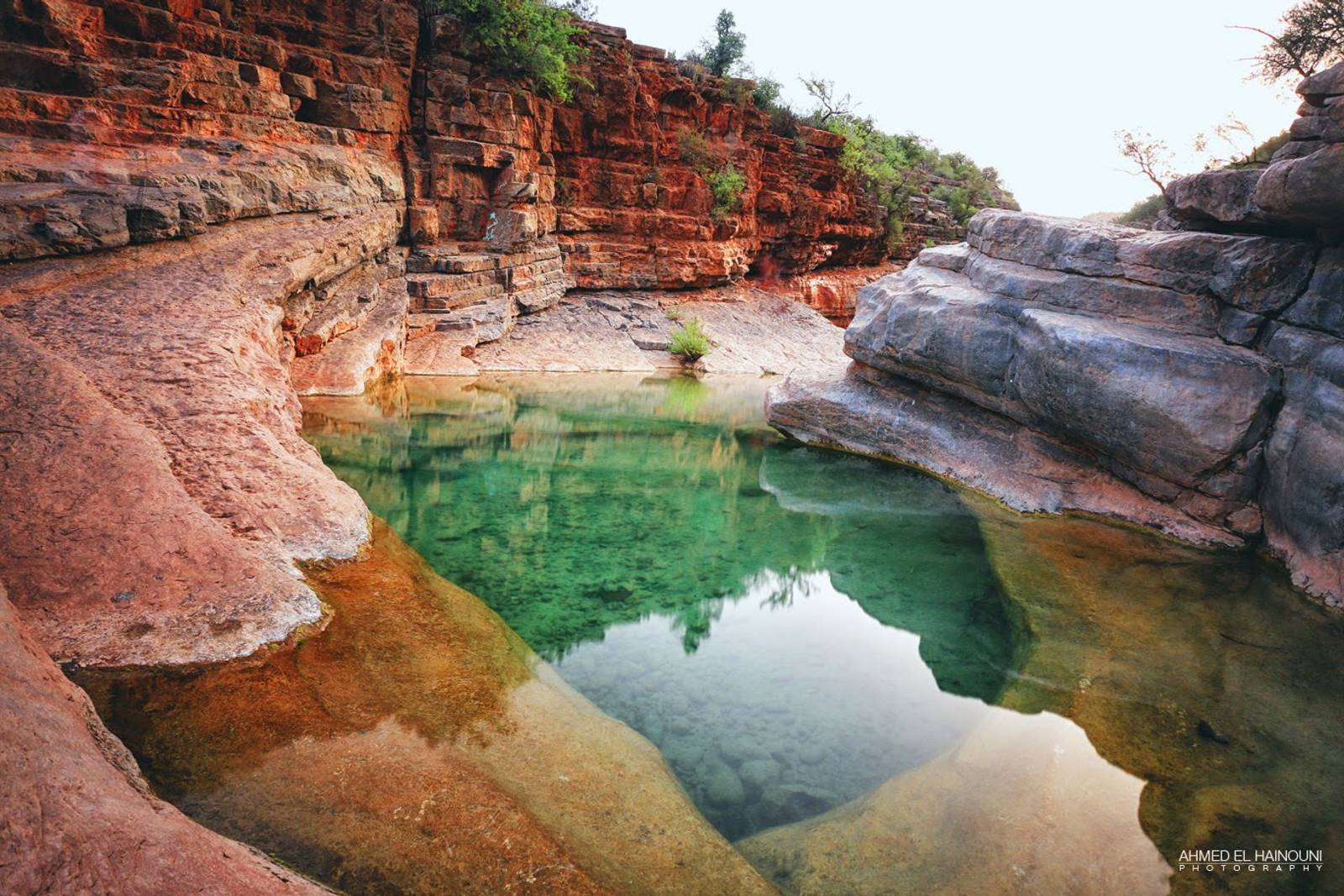
Paradise Valley is a palm gorge in the High Atlas foothills, about 70 km from Agadir and roughly an hour and a half by road. The photographs that sell it are all the same photograph: turquoise pools held between smooth grey rock, palms leaning in from the banks, somebody mid air above the water. That photograph is real. It is also seasonal, and nobody who sells the trip likes saying so.

So this guide starts with the part that matters most. The single biggest variable at Paradise Valley is not the temperature, the crowds or the drive. It is how much water is in the river, and that depends on the rain and snowmelt of the winter that has just passed. Get the timing right and it is one of the best days out on the Souss coast. Get it wrong and you have paid for a hot walk to a shallow puddle, which is exactly what a run of recent traveller reviews describes.

Below is the honest version: the best season, the best time of day, what each part of the year usually looks like, what the day costs and how that maths changes for a group, what to bring, and when you should quietly book something else instead. We run this trip, so we have an obvious interest in you booking it. We would rather you booked it on a week when it is worth the money.

The short answer: spring mornings, and why the water is the real variable

Spring, roughly March to May, is the best time to visit Paradise Valley. Winter rain and snowmelt off the High Atlas feed the river that fills the pools, so this is the window when the water is deepest, the palms are at their greenest and the valley looks like the pictures. Autumn is pleasant too, with easier temperatures and fewer people, though the water is usually at its thinnest before the first autumn rain arrives.

Late summer is the window that disappoints people. By the end of a long dry season the flow has dropped, some pools are shallow and a few can be little more than standing water. That is not a failure of the trip, it is what a seasonal river in a semi arid country does, but it is worth knowing before you pay rather than after.

The caveat that matters more than the calendar: some years simply do not get much rain, and in a dry year the pools stay low right through the spring. The season tells you the odds. It does not tell you the answer. The only reliable way to know is to ask somebody who was there recently, which is why we would rather answer that question on WhatsApp the week before your trip than have you find out on the day.

Month by month: what the valley usually does

Treat the table below as the typical pattern rather than a forecast. Water levels vary year to year, and the busy periods shift with Moroccan school and public holidays as well as European ones.

The pattern to hold in your head is simple. The water builds through the winter, peaks in spring, drains through the summer and bottoms out in early autumn until the rains return. Everything else, temperature, crowds, light, is secondary to that curve.

Paradise Valley through the year: typical conditions, not a guarantee
PeriodWater in the pools, typicallyThe day itselfHow busy
January to February Filling as winter rain arrives, though cold for swimmingGreen valley, short daylight, better for walking than for long swimsQuiet
March to May The fullest of the year, after winter rain and snowmeltThe classic version of the trip, comfortable for walking and swimmingModerate, busier at weekends and around holidays
June to August Falling steadily through the season, lowest at the endHot, and the shade in the gorge matters as much as the waterBusiest, with Moroccan families as well as visitors
September to October Usually at or near its lowest until the first autumn rainPleasant temperatures, noticeably quieter after early SeptemberQuieter
November to December Can refill quickly once the rains startCooler and green, swimming only for the hardyQuiet

The best time of day, and the shape of the day we actually run

Morning is the answer. Arrive early and you get the pools before the midday heat, before the tour groups and before the weekend crowd builds. The light in a gorge is kinder earlier too, which matters if you are going for photographs as much as for the swim.

Our published Paradise Valley excursion runs to a fixed shape, so you can see exactly where your day goes. Hotel pick up is at 08:30, arrival at the gorge is around 10:00, guided exploration through the palm groves and swimming pools runs from about 11:00, lunch by the river is around 13:00, and the return transfer sets off at 15:30. The drive home takes about as long as the drive out, so this is a full day out of your holiday rather than an afternoon.

Two practical notes on that schedule. First, your pick up time depends on where you are staying, so treat 08:30 as the standard rather than as your time, and use the time we confirm with you. Second, lunch is at your own expense (available locally from around 5 euros on our published excursion page) and is not part of the ticket price. That is deliberate: you eat what you want, and you are not being walked into somewhere with a commission arrangement.

Will there actually be water? The honest version

This is the question behind the question, and it is the reason people search for the best time to visit rather than simply booking. Recent traveller reviews of Paradise Valley include complaints of little or no water, and in a dry spell that is a fair description. It would be easy for us to leave that out of a page whose job is to sell a 25 euro seat. It is more useful to you if we leave it in.

Here is what we do about it. If you message us the week before your trip, we will tell you honestly what the water is doing, based on what our drivers and guides have seen that week rather than on a photograph taken in a good year. If the answer is that the pools are low, we will say so, and we will suggest something else instead. Losing one booking is cheaper for us than a review saying we knew and did not mention it.

The other side of the same coin: after very heavy rain, a gorge is not automatically better. Water can rise quickly in a narrow valley, and parts of the walk can become slippery or briefly inaccessible. If a big storm has just passed through, message us before you set off rather than assuming the day runs as normal.

Weekdays, weekends and the local rhythm

Paradise Valley is not only a tourist site. It is somewhere Moroccan families from Agadir and the surrounding towns go on their own days off, which is part of its charm and the whole of its crowding problem. Weekends are the busiest, and summer weekends are busier again, with the parking, the cafe tables and the most swimmable pools all under pressure by the middle of the day.

If your dates allow any flexibility, take a weekday in spring and take the early pick up. If your dates allow none, the early start still does most of the work, because the crowd builds through the late morning rather than arriving at first light.

One more thing that changes the maths at the weekend: the road up from the coast is a single route in and out, and it is heaviest when everybody is heading the same way at the same time. Leaving early is not only about the pools.

What it costs, and how the maths changes for a group

Our Paradise Valley excursion starts from 25 euros per person, and that includes private transport from your hotel, an English speaking guide, hotel pick up and drop off, bottled water and free time to swim. Lunch, entry fees, tips and personal spending are not included.

The distinction that catches people out constantly in Morocco: excursions here are priced per person, while airport and intercity transfers are priced per vehicle. A family of four on the excursion buys four tickets, whereas the same family taking a private transfer pays one fixed price for the car whatever the headcount. Neither model is a trick. They are different products, and for a larger group it is worth asking which one serves your day better.

Our excursion page states that private vehicle options are available on request. We have deliberately not printed a private day rate here, because it depends on the vehicle and the plan, and we will not put a number in front of you that changes later. If you are six or more, send us your group size and we will quote both ways and tell you which is better value, including the times when the honest answer is that the per person tickets win.

Per person excursion maths at the published from price of 25 euros per person
Group sizeExcursion tickets at 25 euros per personWorth asking about a private vehicle?
2 people 50 eurosNo, the per person ticket is the simple option
4 people 100 eurosProbably not, but ask if you want your own schedule
6 people 150 eurosYes, ask us to price both
8 people 200 eurosYes, and check which vehicle takes your group in one car

Where you stay changes your morning

The route to Paradise Valley leaves the coast north of Agadir and turns inland, so guests staying in the Taghazout and Tamraght corridor start the day nearer the valley than guests in the city centre or Founty. That does not change the ticket price, but it does change your pick up time and how much of your morning is spent in a vehicle.

It is worth thinking about before you book a hotel rather than after. If your holiday is built around day trips inland, where you sleep quietly changes the pick up time on every single one of them for the whole week. If it is built around the beach and the promenade, the city side makes more sense and one earlier start is a small price to pay.

If you have not yet sorted your arrival, the same logic applies to the airport run. Agadir Al Massira is about 25 km and roughly 30 minutes from the city centre, and our fixed price transfers are charged per vehicle, so the arithmetic for a family looks very different from a per person excursion ticket.

What to bring, and what to put on your feet

Bring swimwear, a towel and water shoes, sun protection and drinking water, and cash. That is the short list from our original guide and it has not changed. What people underestimate is the footwear. The approach involves uneven rock and worn paths, and the rock near the water is slippery. Flip flops are the wrong choice, and going barefoot on hot rock in July is a worse one. Water shoes, or trainers you do not mind soaking, are right.

On cash: bring small dirham notes for the cafe, the parking and any local guide you use at the valley. Morocco's currency is effectively closed, so you generally cannot buy dirham before you fly, which surprises a lot of first time visitors. You can settle with us in euros or dirham, but the cafe by the river will want dirham and will not want a large note.

A dry bag, or even a sandwich bag for your phone, is the item nobody packs and everybody wishes they had. So is a small towel that actually dries. And if you are travelling with children, put a change of clothes in the car for the drive back, because they will get in the water whether or not that was the plan.

Safety, swimming and the jumping question

The pools are natural, unsupervised and variable. There is no lifeguard, no marked depth and no rope. Depth changes with the season and with the year, which is exactly why the jumping photographs deserve a warning rather than a caption.

People do jump from the rocks here, and local guides will offer to show you where. The depth that made a jump safe in April may not be there in September, and the only sensible rule is that you do not jump anywhere you have not swum first and checked yourself. If you are not a confident swimmer, the shallow ends of the pools are still the good part of the day.

Take the walking seriously in a small way too. The paths are rocky, shade is limited in places, and inland can feel considerably hotter than the coast you woke up on. Water, a hat and an unhurried pace solve almost all of it.

Who should think twice, and what to book instead

Paradise Valley is not the right day for everyone. With a baby or a toddler, the uneven rock and the open water make it a demanding day rather than a relaxing one. If anyone in your group has limited mobility, the approach is not adapted and a wheelchair or a walking frame will not reach the pools. And if you are visiting during a dry spell, the honest recommendation is to spend the day somewhere the scenery does not depend on rainfall.

None of that is a reason to stay at the hotel. The alternatives below are all on our excursion list, all priced per person, and all of them work when the river is low.

If what you actually want is a day shaped around your group rather than a fixed itinerary, the other option is a private driver for the day, which lets you set the stops and the timings yourself. Tell us what you want to see and we will tell you honestly whether it fits into one day.

Alternatives when the pools are low or the valley is not right for your group
ExcursionFrom, per personWhy it works when the valley is thin
Crocoparc tour 25 eurosA fixed attraction with shade and made paths, easy with children
Taroudant and Tioute 40 eurosA walled town and a palm oasis, scenery that does not depend on the river
Agadir boat trip 40 eurosThe water is guaranteed, and the coast is cooler than inland
Essaouira day trip 40 eurosAn Atlantic town with wind and shade on a hot week
Marrakech day trip 45 eurosWorth it if you accept that it is a long day on the road

How to decide, in three lines

If you are travelling between March and May, book Paradise Valley, take the earliest pick up you are offered, and go on a weekday if you can. If you are travelling in autumn, book it, but ask about the water first. If you are travelling in late summer, ask before you book anything, and be genuinely open to the answer being one of the alternatives above.

Whichever way it goes, message us the week before. It costs you nothing, it takes one reply, and it is the difference between a day you would repeat and a day you would warn other people about.

Preguntas frecuentes

When is the best time to visit Paradise Valley?

expand_less
Spring, roughly March to May, when winter rain and snowmelt keep the pools fullest and the palms green. Autumn is a good second choice, with easier temperatures and smaller crowds. Late summer is the weakest window, because levels drop after the dry season.

When are the Paradise Valley pools at their fullest?

expand_more

Will there be water when I visit?

expand_more

How far is Paradise Valley from Agadir and how long is the drive?

expand_more

What time of day should I go?

expand_more

How much does the Paradise Valley trip cost?

expand_more

Is it priced per person or per vehicle?

expand_more

Can I swim, and is it safe to jump from the rocks?

expand_more

What should I bring, and what shoes do I need?

expand_more

Do I need dirham, or can I pay in euros?

expand_more

Is Paradise Valley suitable for young children or someone with limited mobility?

expand_more

Is it busier at weekends?

expand_more

What happens if the weather turns, or the water is too low to be worth it?

expand_more

¿Planeando su viaje? Reserve un traslado privado o explore nuestras excursiones.

boltRespuesta por WhatsApp en minutos, 24/7. Valorado con 5,0 en Google.

check_circle